



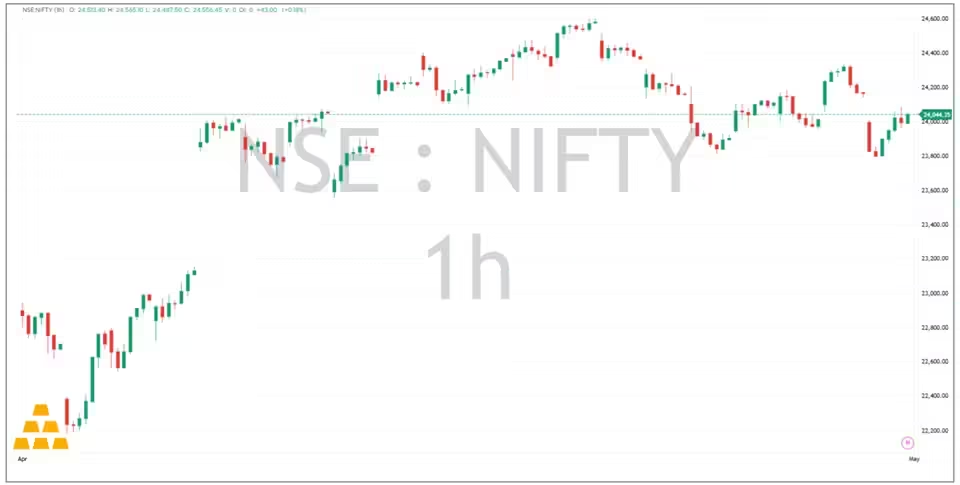
Markets end April in positive despite closing weak on Thursday.
April 30, 2026: The stock markets in India will remain closed on Friday, May 1 in honor of Maharashtra Day. The holiday is observed since May 1, 1960, the day the state of Maharashtra was formed Mumbai, being the financial capital of India and the headquarters of NSE and BSE, the bourses also celebrate the holiday as a public day annually.
Trading and settlement operations in the equity, equity derivatives and Securities Lending and Borrowing segment will be suspended throughout the day. The markets will be back to normal on Monday, May 4.
Commodity Markets
Not every market will remain completely unoperational. The Multi Commodity Exchange (MCX) will open up its evening session between 5 PM to 11:55 PM. The National Commodity and Derivatives Exchange, which is the biggest agri-commodity bourse in the country, will be closed throughout the two sessions.
Future Market Holidays in 2026
There are still nine trading holidays in 2026. May will have one more holiday after today, May 28, Bakri Id. June is also the month of closure of Muharram while no holidays are planned in July and August. Dussehra on October 20, Diwali Balipratipada on November 10, Guru Nanak Jayanti on November 24, and Christmas on December 25 will follow Ganesh Chaturthi on September 14 and Gandhi Jayanti on October 2.
How the Markets closed Thursday
Indian shares closed their trading day on Thursday in the red, burdened with a new burst of international risk aversion. The BSE Sensex fell 582.86 points, or 0.75%, to close at 76,913.50, while the Nifty 50 slipped 180.10 points, or 0.74%, to settle at 23,997.55. Wider markets also went along with the BSE 150 Midcap index sliding 1% and the BSE 250 Smallcap index declining 0.50%.
The session was a considerable blow to investors’ wealth. The total market capitalisation of the BSE listed companies dropped to Rs 464 lakh crore as compared to almost Rs 469 lakh crore in the preceding session, losing about 5 lakh crore in one day.
Selloff was mainly influenced by international indicators. Brent crude hit its highest point of four years at more than $120 per barrel in the session then fell 2 percent to close just above $115. The Indian Rupee was not spared either and it hit a record low of 95.33 against the dollar before it recovered to close at 94.91.
Vinod Nair, Head of Research at Geojit Investments, explained the fall by a set of geopolitical and macroeconomic factors: “The world mood had turned sour as the US-Iran confrontation continued and major shipping routes in the sea were once again disrupted, further fuelling inflationary pressures and stressing global risk assets. In India, the rising oil prices put a burden on the INR and rekindled concerns.”
Nair further said: Fed maintained a strong policy stance, defending the dollar and tightening emerging market conditions, but domestically, autos, banks, metals and real estate were the worst hit, and IT and pharma experienced selective defensive buying.
Despite the Fall Thursday April Ends on a Positive Note
Indian equities have performed well in April, although it has had a poor ending to the month. The Sensex and Nifty 50 increased by 7% and 7.5% respectively in the current month of April ending a four-month run of losses. Much of the month saw the recovery being broad-based due to the improvement in domestic sentiment and inflows into large-cap stocks by foreign investors.
Investors going into the long weekend will be keen on the progress of the US-Iran negotiations. Any development regarding reopening of the Strait of Hormuz may relieve the crude prices and give a boost when trading restarts on Monday.
Disclosure: This article is for educational purposes only.
On Friday, May 1, Indian stock exchanges will be shut for trading in various segments due to Maharashtra Day.
The National Stock Exchange (NSE) and Bombay Stock Exchange (BSE) will be closed. Equities, derivatives and securities lending and borrowing (SLB) will not be traded.
Commodity Markets: Split Schedule
Equity markets will be shut but commodity exchanges will have a mixed trading schedule.
The Multi Commodity Exchange of India will be closed for trading in the morning session but will be open in the evening session from 5:00 PM to 11:55 PM.
On the other hand, the National Commodity and Derivatives Exchange will be closed for both the morning and evening sessions.
Market Holiday Calendar for 2026
The exchange holiday calendar shows that the Indian markets will have several market holidays in the remainder of the year.
Markets will be closed two days in May – on May 1 for Maharashtra Day and May 28 for Bakri Id. There will then be a holiday on June 26 for Muharram.
July and August will have no trading holidays. The markets will be closed on September 14 (Ganesh Chaturthi), October 2 (Gandhi Jayanti) and October 20 (Dussehra).
The next holidays will be on November 10 (Diwali Balipratipada), November 24 (Guru Nanak Jayanti) and the last holiday of the year will be on December 25 (Christmas).
(Exchange holiday schedules: National Stock Exchange)
April Closes with a Bang
The holiday follows a bouncy session on Thursday, April 30, in which Indian shares ended in the red on subdued global cues.
The BSE Sensex declined 583 points, or 0.75%, to settle at 76,913.50, while the Nifty 50 fell 180 points, or 0.74%, to close at 23,997.55. The correction also spilled over to the broader markets, with midcap and smallcap indices falling by 1%.
The correction wiped out significant investor wealth, with the total market capitalisation of companies listed on the BSE falling by some ₹5 lakh crore during the day.
The correction notwithstanding, April was a good month for stocks, with the Sensex and Nifty up 7% and 7.5%, respectively, ending a four-month slide.
Global Factors Weigh on Sentiment
Investor sentiment remained subdued due to the ongoing conflict between the US and Iran, which has impacted global trade and sent crude oil prices soaring.
Brent crude oil briefly breached the $120 per barrel mark, its four-year high, before falling marginally but remaining high. The increase in oil prices has also led to concerns about inflation and balance of payments for net importers such as India.
Meanwhile, the Indian rupee also depreciated during the trading session, dipping to a record low of 95.33 per dollar, before ending the day around 94.91.
Market experts cited both international and domestic factors. Market analysis from Geojit Investments said banking, auto, metals and real estate were the main sectors to decline, while IT and pharma witnessed some buying.
Outlook
Markets are set for a long weekend, and investors are likely to be watchful, keeping an eye on global factors, particularly oil prices and geopolitical tensions, when markets reopen.


