



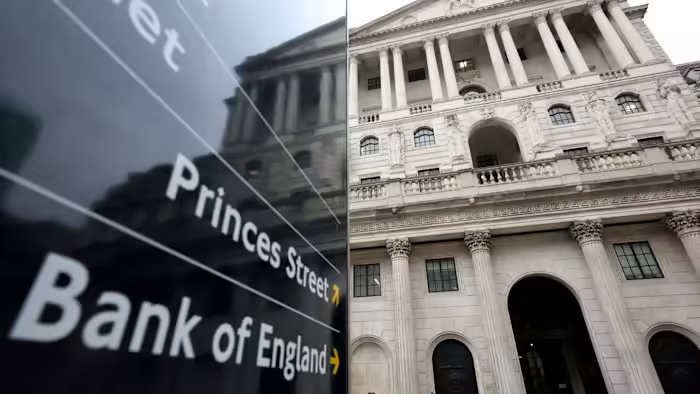
Governor Bailey sends strong signals a near-term increase in interest rates is off the table.
The Bank of England is likely to hold interest rates steady this week as it evaluates the effects of high energy costs and inflationary pressures.
The market is expecting the Monetary Policy Committee (MPC) to keep the Bank Rate on hold at 3.75%, building on its recent pause following a unanimous March decision. Governor Andrew Bailey has already indicated that rates are unlikely to rise in the short term, cautioning that the bank needs to address recent shocks and how they flow through to the economy.
The move comes as inflation is ahead of the Bank’s 2% target. In March, UK inflation was at approximately 3.3%, reflecting, among other factors, rising energy prices due to temporary supply disruptions related to the Iran crisis.
Weighing Inflation and Slow Growth
As inflation dangers have intensified, policymakers are also considering mixed signals about the health of the economy.
The latest figures have revealed stronger-than-anticipated business growth and a 0.5% growth in the UK’s GDP in February, reflecting strength. Meanwhile, weakness in the job market and lack of pricing power for firms has prompted some policymakers to hold off.
The MPC is expected to broadly adopt a “wait-and-see” stance. According to a Reuters survey, a majority will vote for an interest rate hold, but some members could argue for a hike to head off concerns about more persistent inflation.
Energy Prices Complicate Policy Outlook
The main driver for the Bank is the energy price-driven inflation. Oil prices have surged due to geopolitical concerns, driving up costs for firms and the likelihood that these costs will be passed on to consumers. The Bank has cautioned that if the disruption to energy markets continues, inflation will remain higher for longer.
The International Monetary Fund has also noted that higher oil prices could put pressure on global inflation, further fuelling concerns among policymakers about the effects on second round inflationary pressures, including wage growth and price setting.
Debate Among MPC on Timing of Moves
Although the pause is in place, there is a lack of clarity in policy settings. Some on the MPC, such as the bank’s chief economist, Huw Pill, have warned against delaying action if inflation becomes embedded. Others, such as Bailey, have warned of the dangers of tightening too soon and too hard when growth is weak.
Market pricing has at times expected interest rates to be lifted later this year but economists are split on whether rates will need to be tightened.
The Bank also has a messaging challenge following recent market jitters. In March, the BoE sent a signal to investors that it would put up rates sooner than anticipated, causing a bond sell-off. The Bank is now expected to communicate in a more nuanced manner – signalling that it will not rule out future rate hikes, but without triggering a further bond sell-off.
Meanwhile, political events in the UK, including in the Labour Party, are also being closely monitored for their possible impact on bond markets and investor confidence.
Outlook
In the meantime, the BoE is likely to opt for caution. Given the rise in inflation risks and mixed economic signals, the BoE is likely to keep rates on hold while waiting for more data. Future energy prices and their influence on inflation expectations will play a crucial role in whether the pause in tightening gives way to further rises in rates.


